Before you paint, reface or replace, understand what you have, what condition it is in and what you actually want to change.
Your cabinetry is an investment. We treat it like one.
Get a Free Cabinet AssessmentOne homeowner has beautiful wood that just needs a new finish. Another has strong boxes but dislikes the doors. Someone else loves the design but wants a new color. So the first question shouldn't be "How much does it cost to replace my cabinets?" It should be:
"What do my cabinets actually need?"
Excellent candidate for refinishing or painting when structurally sound. The grain can be revitalized or painted for a new look.
Smooth and consistent, MDF paints well. Damaged or moisture-swollen MDF needs careful evaluation first.
A thin layer of real wood. It can often be refinished or painted, but preparation must be gentle.
Smooth, non-porous surfaces. Many can be repainted with proper cleaning, adhesion products and technique.
A kitchen can look old without actually having bad cabinets. If these are true, changing the look may make more sense than removing the whole kitchen.
Improve worn, dull or dated wood without covering its character.
Keep your layout and doors. Whites, greiges, greens, blues or deeper accents can change how the kitchen feels.
New doors and drawer fronts on your existing boxes.
Loose hinges, damaged edges, small cracks and old hardware holes are fixed before the final finish.
| Option | What Changes | What Usually Stays |
|---|---|---|
| Cabinet Painting | Color and exterior finish | Boxes, doors and drawer fronts |
| Cabinet Refinishing | Existing finish is renewed or changed | Much of the original cabinetry |
| Cabinet Refacing | Doors, drawer fronts and visible exterior | Suitable cabinet boxes |
| Door Replacement | Doors and drawer fronts | Cabinet boxes |
| Full Replacement | Most or all cabinetry | Very little of the original |
There is no single right option for every kitchen. It depends on the condition, desired look, door style, layout and scope.
Yes → painting or refinishing your existing doors may be the most logical option.
No → a new color alone won't fix it. That's when refacing or door replacement is worth considering.
This prevents investing in painting only to realize later that the door style was the real problem.
Grease and oils build up near cooking areas and handles. Professional cleaning and degreasing is critical before any new finish.
Peeling can point to problems with the old coating, prior prep or the material underneath. It must be evaluated before recoating.
Areas around handles, drawers and lower cabinets wear first. Many can be corrected during preparation.
Cabinets near sinks and dishwashers are vulnerable. Minor damage may be repairable; extensive swelling may need component replacement.
Shifted doors and loose hardware can make a kitchen look older than it is. These are fixed before the final finish.
MDF can deteriorate with moisture. The extent of the damage decides whether to repair or replace that piece.
Dated doesn't mean replace. If the boxes are strong, you can change:
...without removing the entire kitchen.
A professional should be able to explain the reasoning behind every recommendation.
Start with the cabinet boxes rather than their appearance. If they are structurally sound, securely installed and the existing layout works for your home, painting, refinishing or refacing may be worth considering before full replacement.
Yes. Depending on their condition, changing the color, finish, door style and hardware can significantly update the appearance of older cabinetry.
No. Cabinet painting primarily changes the finish and color while keeping the existing doors. Refacing changes the visible style of the cabinetry, typically with new doors and drawer fronts, while suitable cabinet boxes remain in place.
If you like your current door style, painting may be enough. If you dislike the profile or design of the doors, replacing them may create a more complete transformation.
Many can be, depending on their condition and surface. These materials require appropriate cleaning, preparation and adhesion products. Damaged or moisture-swollen components should be evaluated individually.
Minor damage can often be corrected before finishing. Extensive structural or water damage may require replacing individual components or, in severe cases, larger portions of the cabinetry.
No. Replacement is appropriate for some kitchens, especially when major structural or layout changes are needed. But structurally sound cabinetry may have several other transformation options.
Look for a company that evaluates the existing cabinetry before recommending a service, explains its preparation and finishing process, clearly explains painting versus refacing, and can handle repairs or door replacement when needed. NEXTCOAT CABINETS provides cabinet painting, refinishing, refacing, door replacement and cabinet repairs throughout Broward, Palm Beach and Miami-Dade.
You don't have to decide between painting, refinishing, refacing or door replacement before contacting us. That's part of the assessment. Tell us what you have and what you want your kitchen to look like.
Cabinet Painting • Refinishing • Refacing • Door Replacement • Repairs
Request a Free Cabinet AssessmentCall (954) 234-4663
Serving Broward, Palm Beach and Miami-Dade County, Florida.
Behind every Nextcoat kitchen are 12 careful steps. Here's how they come together.
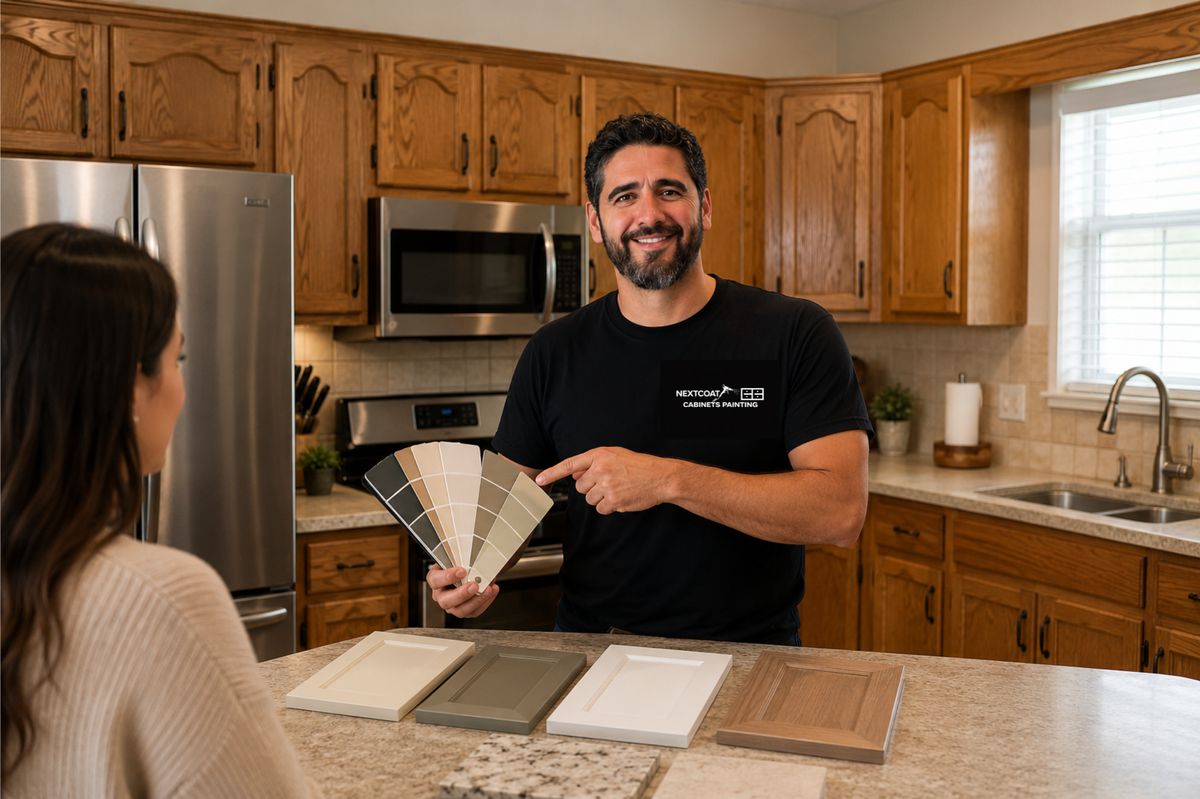 Step 1
We visit your home, listen to what you want to change and inspect your cabinets. You get a clear, detailed estimate with no obligation.
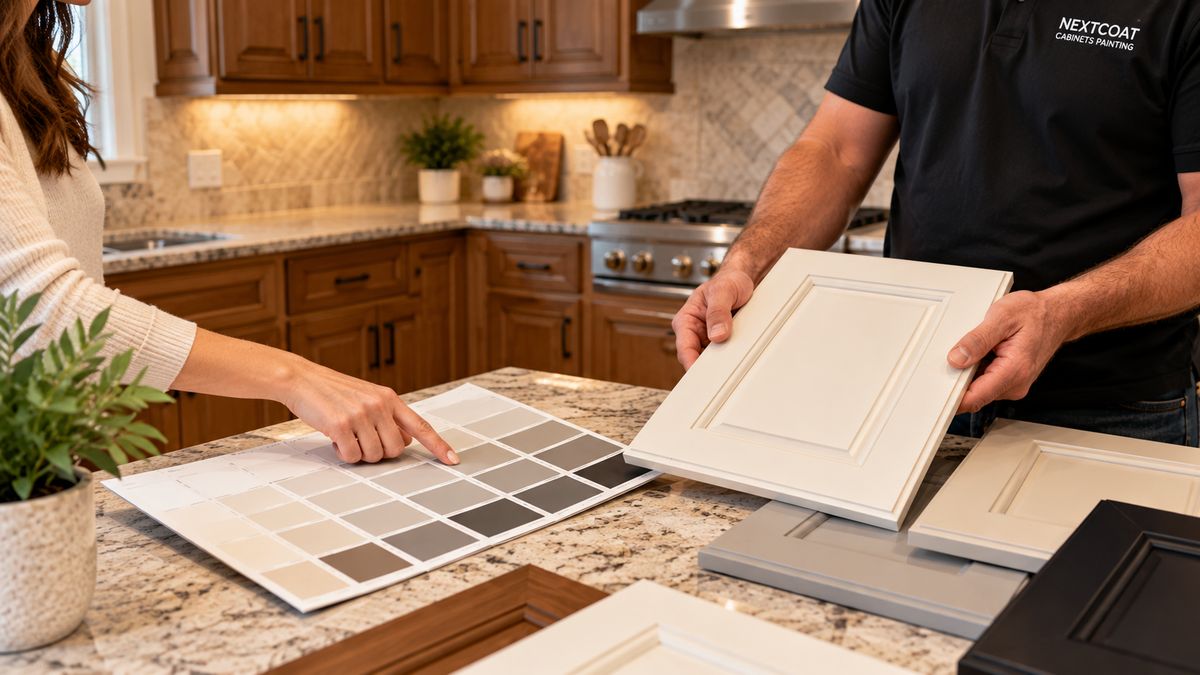 Step 2
We help you choose the right color, sheen, hardware and door style using real samples in your own kitchen light.
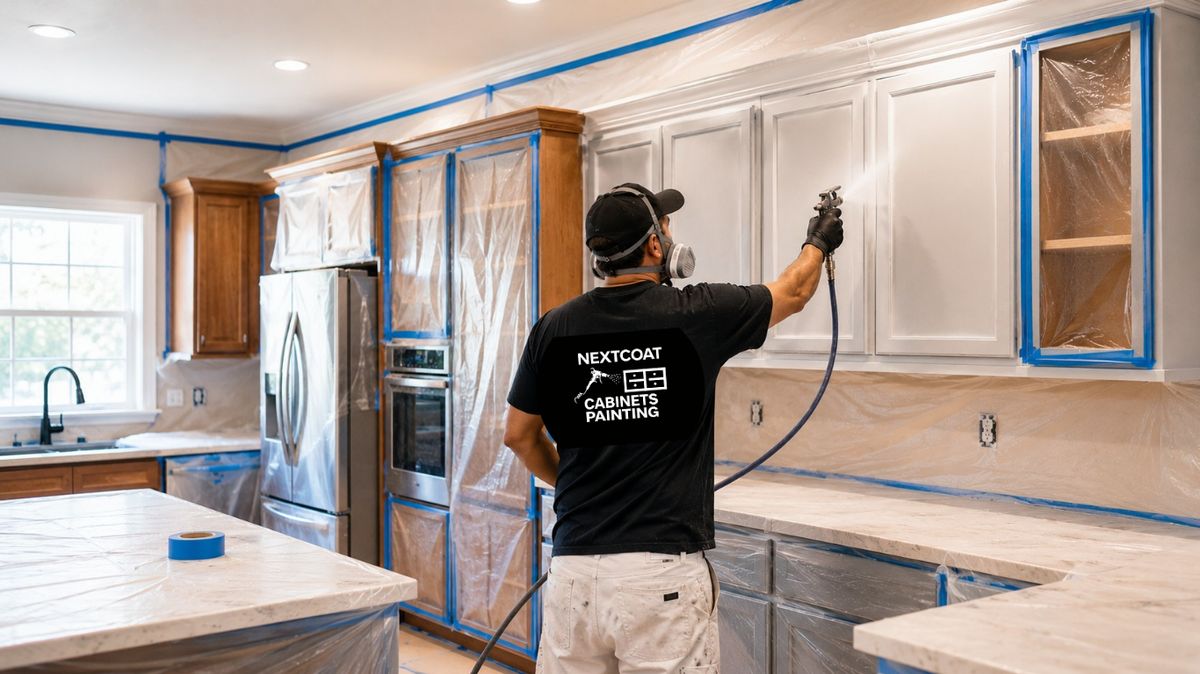 Steps 3–10
Your home is protected and every surface is cleaned, sanded, repaired and primed. Doors get two finish coats sprayed in our shop.
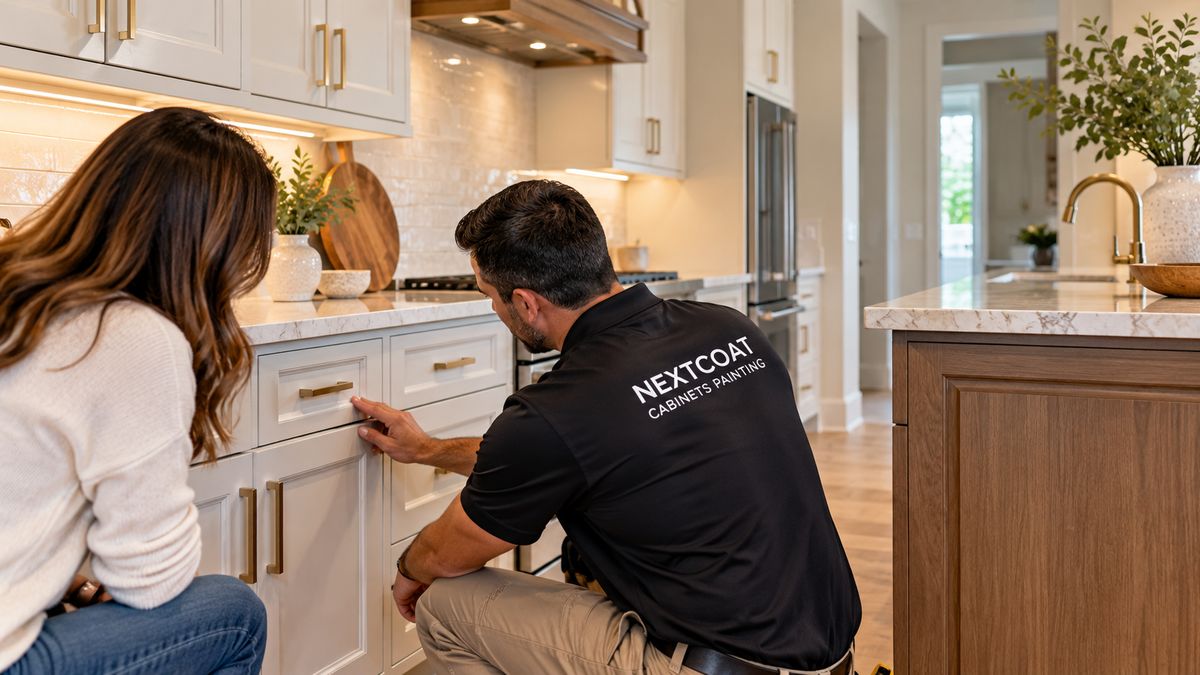 Steps 11–12
We reinstall and align every door and drawer, then walk through the finished kitchen with you to make sure it's perfect.
